Written By: Darko
Electric forklift rental services provide businesses with battery-powered material handling equipment on a flexible, pay-as-you-use basis, delivering efficient, zero-emission operation without the need for capital purchase. This guide explains what electric forklift hire entails, who benefits in the Wollongong and Illawarra region, and how to choose the right equipment and rental terms to match operational demands. Many warehouses, retailers, food processors and distributors face peaks in activity, indoor air-quality constraints and maintenance headaches; renting electric forklifts can address these issues by offering quieter machines, simplified servicing and scalable fleet options. The article maps practical topics including definitions and beneficiary industries, the primary benefits of electric hire, types of electric forklifts available locally, how pricing is structured, what rental contracts and support packages typically include, and why Wollongong Forklift is a local partner worth considering. Throughout, the content uses relevant keywords like electric forklift rental services, electric forklift hire Wollongong, battery electric forklift rental and electric reach truck hire Wollongong to help readers find and evaluate options for their material handling needs.
What Are Electric Forklift Rental Services and Who Can Benefit?
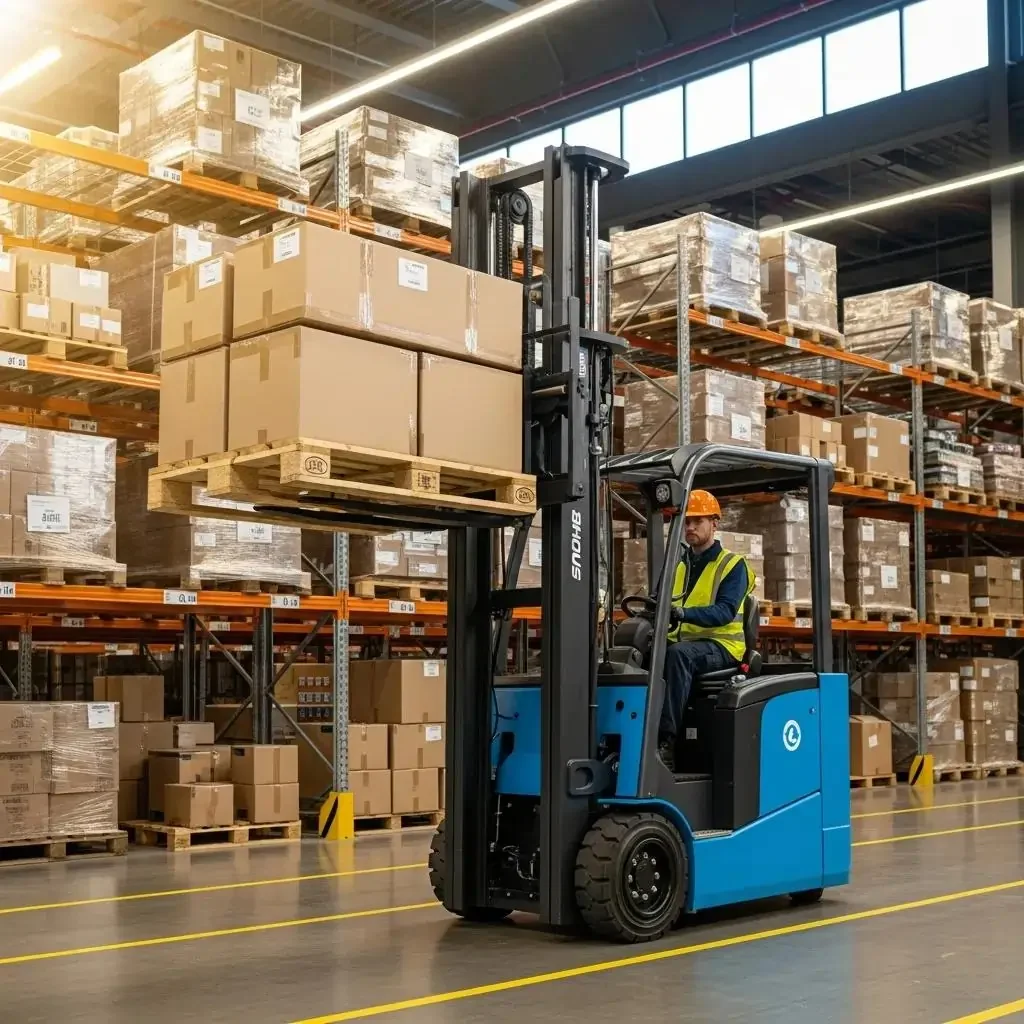
Electric forklift rental services supply businesses with battery-powered forklifts and associated equipment for short-term or long-term hire, typically including the vehicle, charging recommendations, and optional servicing. These rentals work by converting what would otherwise be a capital purchase into an operational expense, letting businesses scale capacity quickly and trial machines before committing to a purchase. The primary benefit is operational flexibility: firms can match fleet size to demand peaks, maintain uninterrupted workflow during repairs, and adopt quieter, zero-emission equipment suited to indoor environments. Understanding who benefits helps businesses prioritise the hire option that aligns with compliance, budget and productivity goals.
Which industries in Wollongong commonly use electric forklift hire?
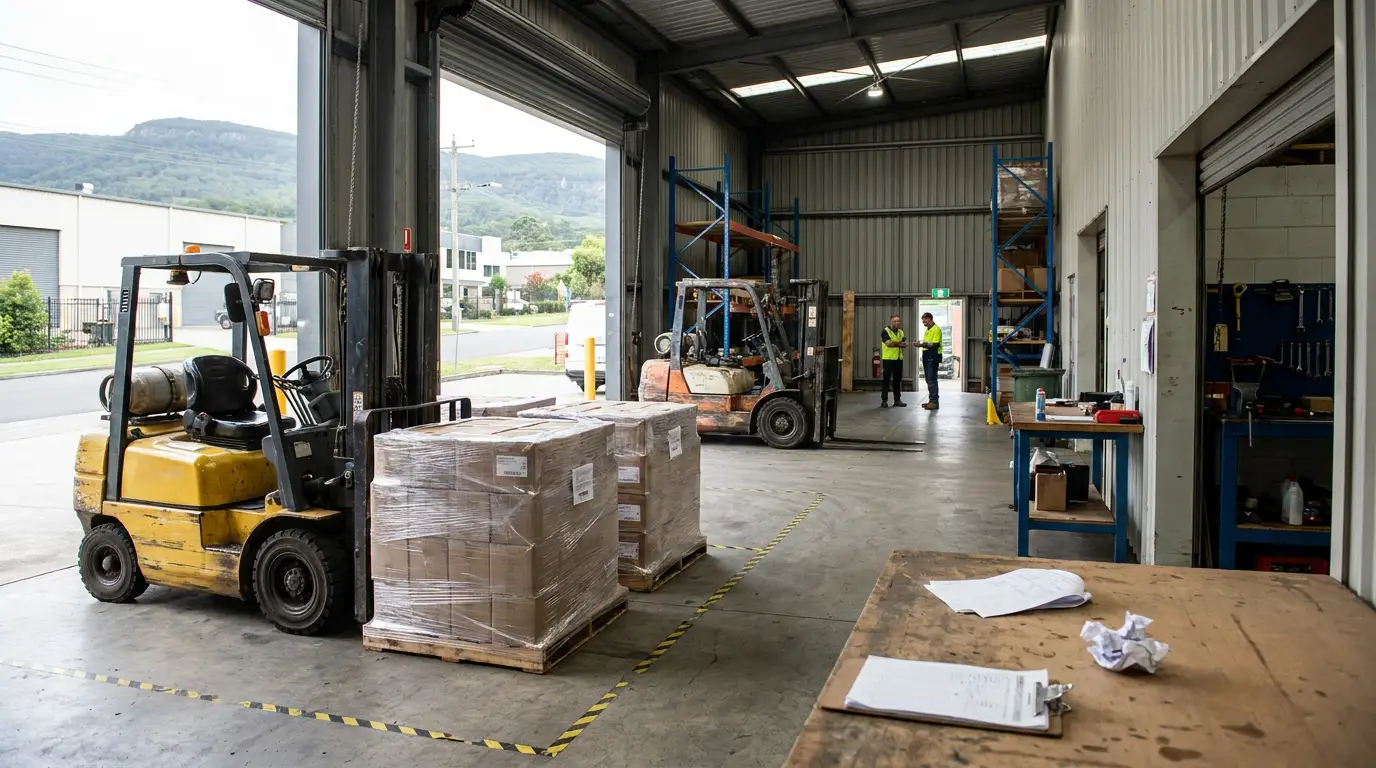
Warehousing and distribution are among the largest local users of electric forklift hire because indoor racking, continuous shift work and frequent manoeuvring favour zero-emission traction and lower noise. Food and beverage operations, including cold storage and light processing, rely on electric forklifts to protect product quality and meet hygiene standards while avoiding combustion emissions inside enclosed spaces. Retail distribution centres and light manufacturing facilities also favour electric solutions for predictable running costs and reduced onsite maintenance; these sectors often need flexible capacity during seasonal peaks or promotional events. Each industry values different attributes: battery runtime for long shifts, compact turning for narrow aisles, or higher capacity for pallet stacking, so rental choices should reflect the specific operational profile.
How does electric forklift rental support warehouse and logistics operations?
Electric forklift hire supports warehouse efficiency by providing reliable, low-noise vehicles for loading, unloading, stacking and order picking, which reduces disturbances in mixed-use facilities and improves staff comfort. Rentals allow managers to scale fleets quickly for short-term surges, such as seasonal demand, without long procurement lead times, and they shift maintenance responsibilities to the provider when servicing is included. Using electric equipment also improves indoor air quality and reduces ventilation requirements compared with combustion alternatives, which helps compliance and working conditions. These operational advantages translate into measurable benefits: less unplanned downtime, clearer budgeting through predictable rental fees, and the ability to pilot new battery or telematics technology before buying.
Wollongong Forklift is an independent Australian-owned forklift dealer and rental service in the Illawarra region that supplies electric forklifts for hire alongside petrol, diesel, telehandlers, walkie stackers and pallet trucks. They offer flexible short-term and long-term rental options, tailored solutions and local expertise to match machine selection to site needs; businesses can request a quote to explore rental plans and machine availability. This local capability helps Wollongong organisations access appropriate electric equipment quickly while relying on regional service support.
What Are the Key Benefits of Renting Electric Forklifts?
Renting electric forklifts delivers a combination of financial, operational and environmental benefits that suit modern warehouse and logistics operations. Financially, rental converts capital expenditure into operational costs, reducing upfront investment and helping companies preserve cash flow while gaining immediate access to capable equipment. Operationally, electric forklifts require less routine servicing than combustion engines, offer quieter performance and improve indoor air quality; providers often include maintenance in rental packages, further lowering onsite administrative burden. Environmentally, battery electric forklift rental supports zero-emission targets, cuts local pollution and aligns with sustainability policies that matter for suppliers and customers alike. Renting also gives businesses rapid access to newer battery technologies and telematics, enabling trials of lithium-ion options or fleet monitoring without long-term commitments.
Indeed, the broader push for sustainability in logistics underscores the critical role of electric forklifts in achieving decarbonisation goals.
Decarbonising Logistics: Electric Forklifts & Green Warehousing
The increasing impacts of climate change and global warming, highlighted by recent widespread natural disasters, underscores the urgent need to shift to sustainable business models across all industries. Supply chains contribute to approximately 50% of global CO2 emissions, with logistics ranking among the three most impactful activities. This highlights the critical need to decarbonise the logistics sector through the electrification of freight transportation and the adoption of green warehousing practices.
Optimising the economic and environmental performance of electric trucks and forklifts in the logistics sector: exploring the impact of opportunistic recharging …, 2023
-
Key benefits of electric forklift rental are practical and measurable:Cost flexibility: Avoids large capital purchases and spreads expense as operational rental fees.Maintenance simplicity: Provider-managed servicing reduces in-house maintenance workload and downtime.Indoor suitability: Zero tailpipe emissions and lower noise suit enclosed or sensitive environments. Access to current technology: Rentals allow testing of battery types and telematics before procurement.Scalability: Easy fleet scaling for seasonal peaks or short-term projects.
These benefits make renting attractive for businesses wanting immediate improvements in air quality, noise reduction and budget predictability. The next section explains how hiring specifically reduces maintenance and cost burdens in practice.
How does electric forklift hire reduce costs and maintenance burdens?
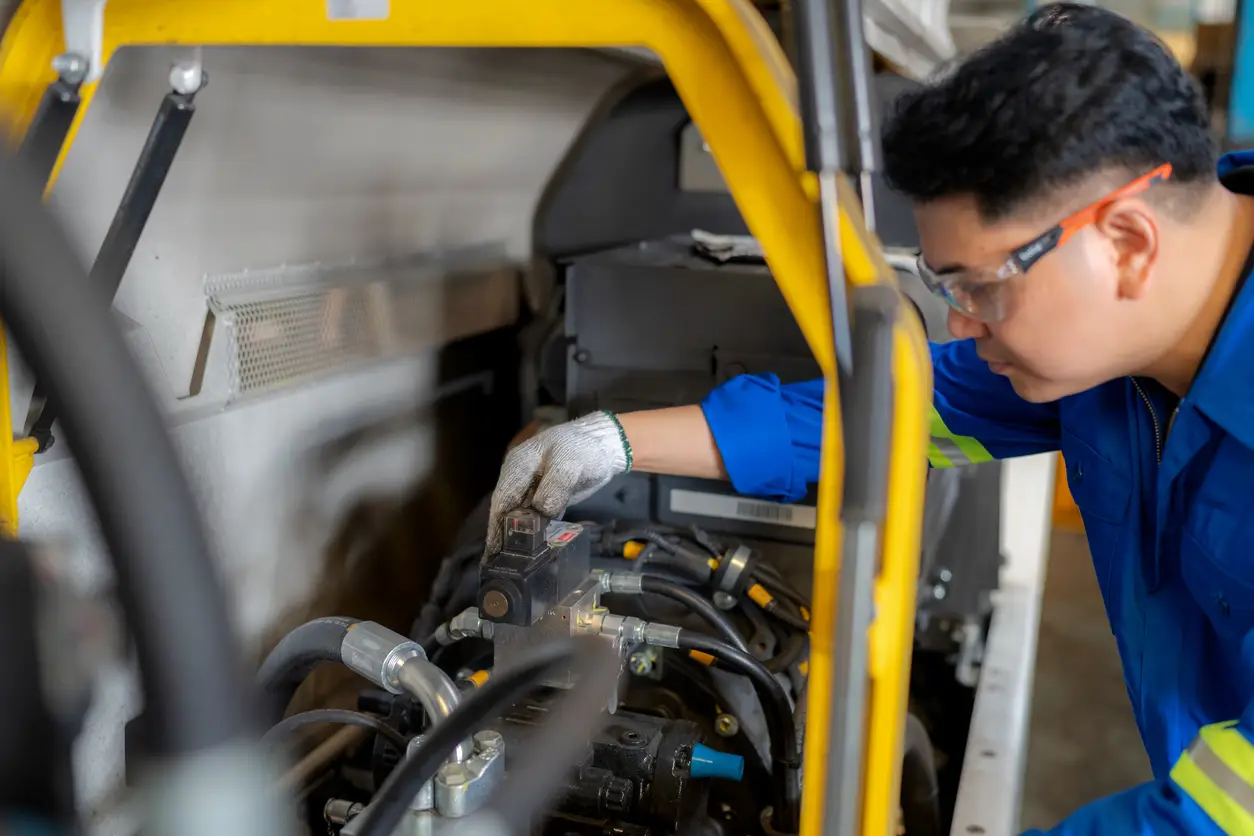
Electric forklift hire reduces costs by eliminating depreciation concerns and shifting servicing costs to the rental provider when maintenance is included, turning unpredictable repair bills into fixed monthly or weekly fees. Energy costs are typically lower for electric motors than for petrol or diesel engines because of higher efficiency and lower per-unit energy prices, particularly when charging is managed to avoid peak tariffs. Provider-managed maintenance often covers routine checks, battery health monitoring and emergency response, which shortens downtime and reduces the need for in-house spares inventories. For budgeting and lifecycle planning, rental provides predictable OPEX and removes disposal or resale complexities, allowing operations teams to focus on productivity rather than asset management.
Optimising the energy consumption and routing of electric forklifts is a key aspect of maximising their efficiency and economic benefits in warehouse operations.
Electric Forklift Energy Management & Warehouse Efficiency
Concerns about environmental degradation and fossil fuel depletion have led to the advent of energy-aware manufacturing and material handling processes in factories and warehouses. However, as the transition to eco-friendly material handling by electric material handling vehicles (EMV) is progressing, the use of electric forklifts (EFs) remains a challenge, as these EMVs are recognised only as energy consumers. In this paper, we develop an integrated dynamic algorithm for solving the EF routing problem with battery charging constraints in which EFs’ picking or put-away routes, EFs’ battery charging schedules, and the number of EFs operated are simultaneously determined while considering electricity consumption in a warehouse.
An electric forklift routing problem with battery charging and energy penalty constraints, S Lee, 2022
Why are electric forklifts ideal for indoor and environmentally sensitive environments?
Electric forklifts are ideal indoors because they produce no tailpipe emissions, which preserves air quality in enclosed warehouses, refrigerated spaces and food-handling areas where contamination risk must be minimised. Their quieter operation reduces acoustic strain and improves communication on busy floors, contributing to safer working conditions and better staff wellbeing. Regulatory and customer expectations increasingly favour zero-emission equipment, making electric forklifts the preferred choice for businesses looking to demonstrate environmental responsibility. In addition, the absence of combustion exhaust simplifies ventilation requirements and compliance in sensitive manufacturing or storage environments.
What Types of Electric Forklifts Are Available for Rent in Wollongong?
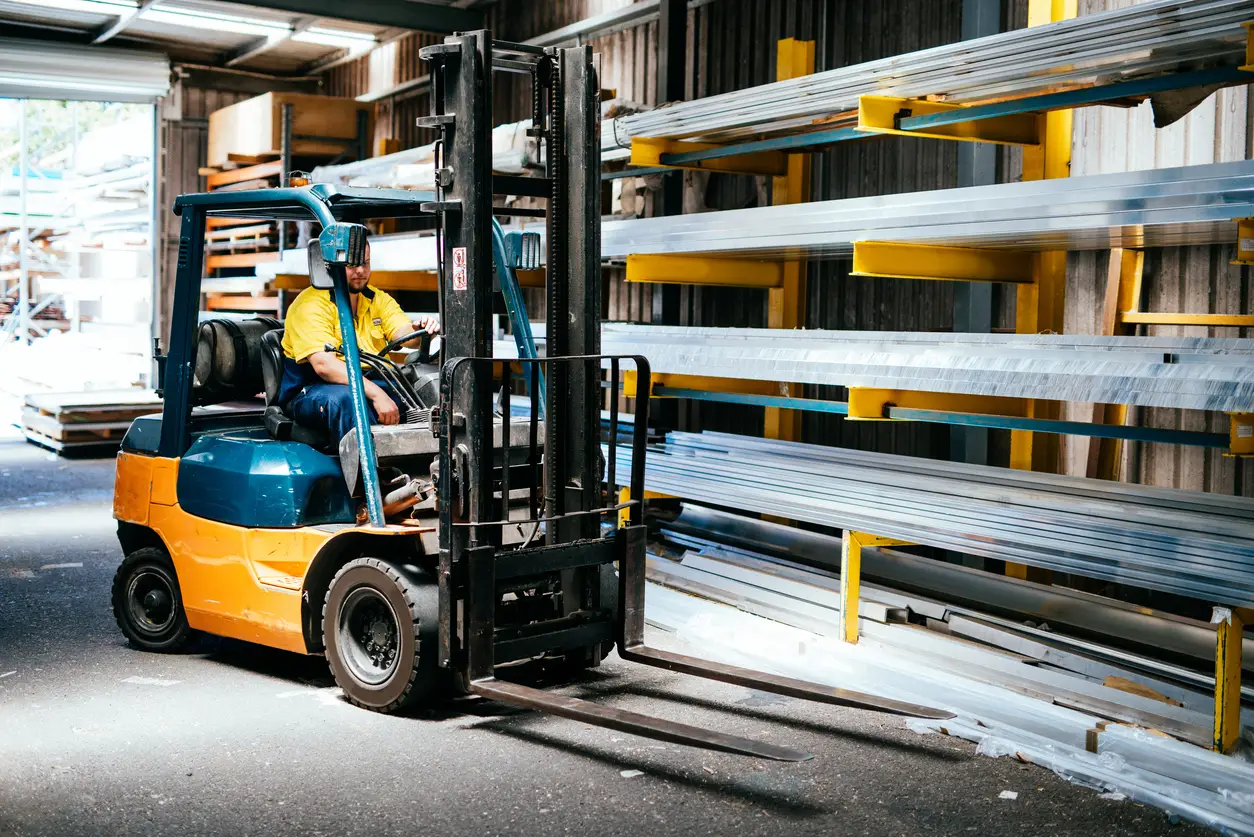
Electric forklift rental fleets commonly include a range of battery-powered machines to suit varying capacity and space requirements, from compact pallet jacks to heavy counterbalance units and specialised reach trucks for high racking. Selecting the right type depends on load capacity, aisle width, lift height and the tasks the machine will perform, such as order picking, dock work or stacking. Rental suppliers typically offer options with different battery technologies and optional attachments, enabling customers to match runtime and duty cycles to shift patterns.
Different electric forklift types serve distinct operational needs and manoeuvrability requirements.
| Forklift Type | Typical Capacity | Ideal Application |
|---|---|---|
| 3-wheel electric forklift | 1.2–1.8 t | Tight aisles, retail and compact warehouses |
| 4-wheel electric forklift | 1.5–4.0 t | General counterbalance tasks, stable loads |
| Electric reach truck | 1.0–2.5 t (high lift) | High-rack storage and narrow-aisle racking |
| Electric pallet jack / walkie stacker | 0.5–2.0 t | Dock transfers, short-distance pallet moves |
What are the features and uses of 3-wheel and 4-wheel electric forklifts?
3-wheel electric forklifts offer tighter turning radii and excellent manoeuvrability, making them suitable for narrow aisles and busy retail storerooms where space is limited. Their typical capacities tend to be lower than larger 4-wheel models, but their compact footprint speeds handling in constrained layouts and short-distance moves. By contrast, 4-wheel electric forklifts trade some agility for greater stability and higher load capacities, making them better for heavier pallets, rougher surfaces near docks or outdoor loading areas where stability is critical. Rental decisions often weigh the need for agility versus capacity: sites with narrow racking prefer 3-wheel units, while heavier-duty tasks benefit from 4-wheel machines.
How do electric reach trucks and pallet jacks enhance material handling?
Electric reach trucks specialise in vertical lift and narrow-aisle navigation, allowing efficient access to high racking and dense storage configurations while minimising aisle width requirements. Their mast and extension mechanics are optimised for picking and placing pallets at height, reducing manual handling and speeding case-pick operations. Electric pallet jacks and walkie stackers excel at short, horizontal moves such as dock-to-rack transfers and order consolidation, offering a cost-effective solution for low-level transport without the need for a full counterbalance forklift. When rented, these units let businesses optimise their material flow strategy by assigning the most efficient machine to each task.
How Is Electric Forklift Rental Pricing Structured?
Electric forklift rental pricing is typically structured around duration, equipment class, included services and delivery or setup requirements, with daily, weekly and monthly rates reflecting different use cases and cost efficiencies. Short-term hire addresses ad-hoc needs such as breakdown cover or temporary peaks, charged at higher daily rates; weekly and monthly contracts lower the effective daily cost and suit longer projects or fleet substitutions. Additional cost drivers include machine capacity and attachments, battery type and charging requirements, inclusion of maintenance and service response times, and any transport or delivery fees. Understanding these components helps businesses compare quotes and choose a rental structure that balances flexibility and total cost of ownership for the hire period.
| Rental Duration | Typical Pricing Model | Indicative Rate Band |
|---|---|---|
| Daily hire | Ad-hoc/urgent needs | Higher daily rate for short use |
| Weekly hire | Short projects/peaks | Reduced daily equivalent vs daily |
| Monthly / long-term | Extended projects/fleet scaling | Lowest daily equivalent for sustained use |
This table clarifies that longer commitments typically deliver lower daily equivalents while short-term hires provide the fastest response for urgent needs. When comparing quotes, always check whether maintenance and delivery are included to avoid unexpected charges.
What factors influence electric forklift rental costs in Wollongong?
Several factors influence cost: the machine’s capacity and specifications determine base rental rates because higher-capacity units cost more to supply and maintain; attachments such as side shifters or specialised forks add rental premiums. Battery technology affects pricing because lithium-ion options generally command higher rental rates but deliver faster charging and longer usable shifts, which may lower operational costs. Duration and seasonality influence availability and price; peak periods can increase short-term rates, while inclusion of maintenance, delivery and operator training also moves the overall quote upwards or downwards depending on the provider’s package. Local delivery distances and site access requirements can add logistical costs, so detailed site requirements help providers produce accurate quotes.
How do daily, weekly, and long-term hire rates compare?
Daily hire rates are designed for flexibility and rapid response; they are the most expensive on a per-day basis but ideal for emergencies or one-off tasks where commitment is minimal. Weekly hire smooths costs for short projects, offering a better daily equivalent and removing the administrative burden of renewing daily bookings. Monthly and long-term hires offer the lowest daily equivalent and are preferable for ongoing projects or fleet augmentation, often including options for maintenance packages and predictable budgeting. Choosing between durations depends on expected usage hours, project timelines and whether the business values lowest daily cost or maximum flexibility.
What Rental Terms and Support Services Are Included?
Most electric forklift rental packages clarify what is included in the rental price and which services are optional, helping clients avoid scope gaps and downtime during the hire period. Typical inclusions are routine maintenance, availability of emergency repairs under agreed response times, delivery and collection, and basic operator familiarisation or safety briefings. Contracts should explicitly state service-level agreements for response times, liabilities for damage, fuel or electricity arrangements, and insurance responsibilities. Understanding these terms up front reduces disputes and ensures that the rental arrangement supports continuous operations.
| Rental Package Component | Typical Inclusion | Purpose / Value |
|---|---|---|
| Maintenance & servicing | Often included | Keeps machine operational and reduces downtime |
| Delivery & collection | Optional / often charged | Ensures machine arrives ready for use at site |
| Operator training | Basic familiarisation included | Promotes safe use and reduces incident risk |
| Battery support | Charging guidance and swap options | Maintains runtime and shift coverage |
Does electric forklift rental include maintenance and servicing?
Yes, many rental agreements include routine maintenance and emergency repairs as part of the package, though the exact scope varies by provider and contract terms. Included maintenance typically covers scheduled inspections, basic wear part replacements and on-call technical support, with response times specified in service-level agreements; consumables like tyres or excessively damaged parts may be excluded depending on terms. Provider-managed servicing reduces administrative burden for hirers and shortens downtime by ensuring technicians and spare parts are available through the rental network. Clients should clarify SLA response times, any deductibles for repairs and whether battery diagnostics or replacements are included to avoid unexpected costs.
What flexible rental options are available for short-term and long-term needs?
Rental options range from ad-hoc daily hire for emergency cover to fixed-term monthly contracts for sustained projects, and bespoke agreements that can include rent-to-buy provisions for organisations planning eventual ownership. Short-term hire suits seasonal peaks, one-off projects and marginal capacity increases, offering immediate access without long-term commitment. Long-term contracts are best for project-based requirements or when businesses need consistent fleet capability over months, often unlocking better rates and tailored maintenance agreements. Rent-to-own structures offer a pathway to ownership while spreading cost over time, which can suit businesses that expect long-term need but prefer to defer capital outlay.
If you need a tailored rental plan that includes maintenance, delivery and training, Wollongong Forklift provides flexible rental options and local servicing support to match short-term and long-term needs. Their regional expertise helps ensure machine selection, delivery logistics and ongoing servicing are aligned with site requirements; contact them to discuss customised plans and response expectations.
Why Choose Wollongong Forklift for Your Electric Forklift Rental Needs?
Wollongong Forklift positions itself as a local, independent Australian-owned dealer and rental service that specialises in supplying a comprehensive range of forklifts, petrol, diesel and electric, plus telehandlers, walkie stackers and pallet trucks for sale and hire. Their regional focus on the Illawarra means they can provide tailored machine selection, flexible rental durations and local maintenance support to minimise downtime and respond quickly to service needs. Competitive pricing and flexible financing are part of the solutions they offer, alongside consultative support that helps clients match equipment to specific site constraints and operational goals. Choosing a local provider with a broad hire fleet simplifies procurement and ensures access to both the equipment and the aftercare needed to keep operations productive.
-
Wollongong Forklift’s key value propositions include: Local Illawarra expertise: Regional knowledge speeds delivery and service response. Comprehensive equipment range: Electric and combustion machines plus auxiliary equipment for diverse needs.Flexible rental and financing: Short- and long-term hire terms adjusted to project requirements.Ongoing maintenance and servicing: Provider-managed support to reduce in-house workload.
These attributes make Wollongong Forklift a practical partner for businesses seeking reliable electric forklift hire with local support. The section below explains how their tailored process typically works in practice.
How does Wollongong Forklift provide tailored solutions and customer support?
Wollongong Forklift follows a consultative process beginning with needs assessment and site considerations to identify the best machine type, capacity and battery option for the client’s operational profile. After selection, they coordinate delivery and provide operator familiarisation and setup guidance to ensure immediate, safe use on site. Ongoing support includes scheduled servicing and prompt response to technical issues when maintenance is included in the rental package, which reduces customer management overhead. This end-to-end approach helps clients move from selection to steady operation quickly, with local technicians and parts availability supporting continuity.
What makes Wollongong Forklift a trusted local business in the Illawarra region?
As an independent Australian-owned dealer focused on the Illawarra market, Wollongong Forklift brings local ownership perspectives that align with regional business needs, offering faster mobilisation and a practical understanding of common industry challenges. Their combination of hire and sales options across electric, petrol and diesel machines enables customers to trial equipment through rental before committing to purchase, while maintenance and servicing back up operational continuity. The breadth of services, from walkie stackers and pallet trucks to telehandlers, means clients can source complementary material handling equipment from a single local partner. These practical capabilities support trustworthiness and simplify equipment strategy for Wollongong businesses.