Essential Tips for Reducing Forklift Accidents: Comprehensive Forklift Safety and Prevention Guide
Written By : Darko
Forklift accidents remain one of the most common sources of serious workplace injury in material handling environments, and reducing those incidents requires targeted, practical measures. This guide provides actionable tips for reducing forklift accidents, combining operator-focused practices, maintenance regimes, traffic management and cultural change so managers and operators can implement immediate controls and lasting improvements. Readers will learn how operator training, pre-shift inspections, preventative maintenance and warehouse layout adjustments each reduce risk, plus checklists and comparison tables to streamline implementation. The article maps the main areas you need: operator safety tips and certification, a maintenance checklist with inspection schedules, warehouse traffic management, load handling and stability, strategies to build a safety culture, and the common causes of incidents with direct prevention measures. Throughout, we use current research perspectives and semantic concepts like the stability triangle, preventative maintenance for electric forklifts, and pedestrian exclusion zones to make recommendations practical and measurable.
What Are the Most Effective Forklift Operator Safety Tips?
Operator safety combines correct behaviours, appropriate PPE and consistent pre-shift checks to prevent incidents before they occur. Skilled operators reduce risk because they understand load dynamics, sightlines and how stability changes with attachments; this knowledge directly lowers tip-over and struck-by incidents. Implementing structured checklists and reinforcing safe driving techniques yields measurable reductions in accidents and supports a dependable safety baseline across shifts. The following subsections unpack how training delivers these outcomes and what certification employers should expect to verify for safe operation.
How Does Proper Operator Training Reduce Forklift Accidents?
Proper training reduces forklift accidents by teaching operators how machines behave under load and how to recognise hazards before they escalate. Training mechanisms include hands-on competency checks, hazard recognition modules and emergency procedure drills that improve response times and decision-making under pressure. Outcomes of effective training are reduced near-miss rates, fewer improper lifts and clearer judgement on when to stop operations and seek assistance. These competencies feed directly into certification and refresher training cycles that keep skills current and aligned with workplace risks.
What Are the Key Certification Requirements for Safe Forklift Operation?
Certification requirements typically verify that an operator can perform pre-shift inspections, safely handle rated loads and demonstrate emergency stopping and load-lowering procedures. Employers should check that certificates document practical competency, not just classroom attendance, and that refresher training occurs every three years or after incidents, in line with OSHA and ANSI standards. A short employer checklist helps maintain compliance: verify practical assessment, confirm documented refresher dates and require recorded on-site inductions for new areas. Clear certification expectations reduce ambiguity and ensure operators meet consistent competency standards before solo operation.
The next priority is ensuring machines stay mechanically sound through scheduled maintenance and inspections.
How Can Regular Forklift Maintenance Prevent Accidents?
Regular maintenance prevents accidents by identifying and fixing mechanical faults, such as worn brakes, leaking hydraulics or damaged mast components, before they cause failure during operation. Preventative maintenance reduces sudden breakdowns that can lead to tip-overs, load loss or loss of control, and it preserves critical safety devices like seatbelts and backup alarms. Implementing a maintenance programme with daily checks and scheduled servicing lowers downtime and the secondary costs associated with collisions and damaged stock. Below are practical maintenance details, a maintenance checklist table and scheduling guidance to make inspections systematic and effective.
A comprehensive maintenance checklist focuses attention on the parts most likely to create risk if neglected; the table below compares inspection frequency and consequences.
| Maintenance Item | Recommended Inspection Frequency | Risk if Neglected |
|---|---|---|
| Engine / Battery & Electrical Systems | Daily visual checks, monthly detailed inspection | Sudden power loss, control failure, ignition faults |
| Brakes & Steering | Daily functional check, monthly adjustment | Reduced stopping ability, loss of steering control |
| Hydraulics & Mast | Daily lever check, monthly leak and pressure testing | Load drift, mast collapse, uncontrolled descent |
| Tyres & Wheels | Daily pressure and visual check, monthly replacement review | Reduced stability, punctures, imbalance |
| Safety Devices (seatbelt, horn, alarms) | Daily functional test | Operator ejection, unnoticed reversing, poor warning signals |
This maintenance comparison clarifies which systems carry the highest immediate risk and why routine checks are non-negotiable. Regularly tracking these items in a maintenance log helps supervisors spot trends and plan service interventions before failures occur.
When the checklist identifies faults beyond in-house capability, engaging a professional service delivers deeper diagnostics and certified repairs. Wollongong Forklift offers maintenance and repair services tailored to a mixed fleet, covering petrol, diesel and electric forklifts as well as telehandlers and walkie stackers, so businesses in the Illawarra region can arrange scheduled inspections and fast repairs that reduce risk and downtime. Choosing a local service provider simplifies coordination for fleet servicing and supports a preventive maintenance contract that keeps inspection frequency consistent and documented. After maintenance planning, the focus moves to how warehouse layouts and traffic systems reduce collision risk.
What Should a Comprehensive Forklift Maintenance Checklist Include?
A comprehensive checklist ensures operators and technicians inspect both operational controls and structural components before use. Essential pre-shift items include lights, horn, seatbelt, steering responsiveness and tyre condition, while scheduled checks include brake pad wear, hydraulic hose integrity and battery charge management. Recording each check and noting corrective actions creates a traceable safety history that supports audit readiness and continuous improvement. A short checklist that is easy to complete and review encourages compliance and makes daily inspections part of routine shift handover.
How Often Should Forklift Inspections and Repairs Be Conducted?
Inspection frequency depends on utilisation, environment and machine type, but a baseline schedule works for most operations: daily pre-shift checks, weekly functional tests, monthly deeper inspections and annual professional servicing. Environments with heavy dust, corrosive materials or continuous shifts require shortened intervals and more frequent component replacement. Triggers for immediate repairs include abnormal noises, fluid leaks, visible structural damage or failed safety devices; these should remove the machine from service until cleared. Keeping a maintenance record enables data-driven decisions about inspection frequency and aids in identifying high-risk machines that need accelerated servicing.
The next major area to address is how to design the workplace to separate traffic and protect pedestrians effectively.
What Are Best Practices for Warehouse Forklift Safety and Traffic Management?
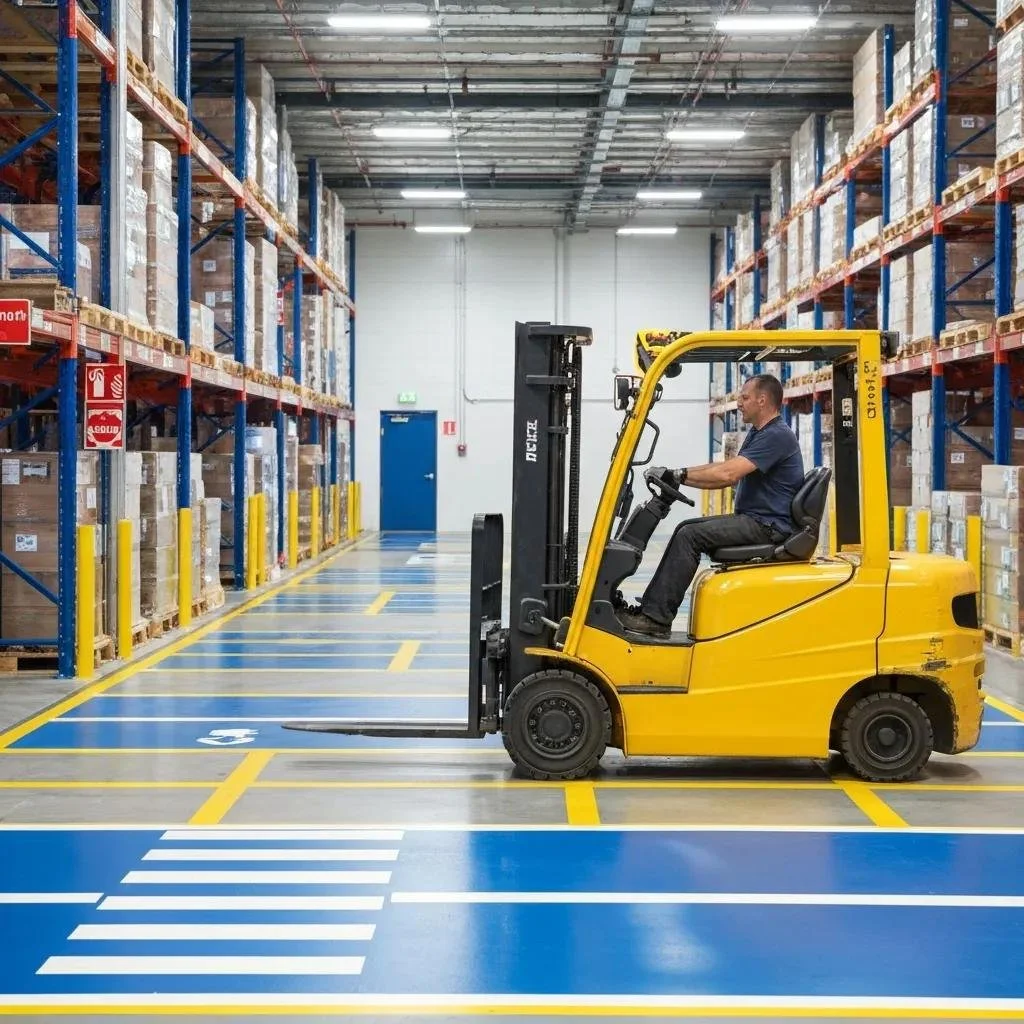
Effective traffic management begins with a clear plan that segregates pedestrian and vehicle movements, defines speed limits and marks routes visually to reduce conflicts. Designing one-way aisles, designated crossing points and raised walkways decreases the chances of struck-by incidents and improves sightlines for operators. Signage, floor markings and physical barriers guide behaviour and make safety expectations unambiguous for everyone in the space. The following subsections outline layout strategies and traffic controls that produce measurable safety improvements.
How Can Warehouse Layouts Improve Forklift and Pedestrian Safety?
Warehouse layout improvements minimise interaction points between pedestrians and forklifts by placing high-traffic pedestrian routes away from vehicle corridors and by widening aisles where lifts operate. Storage placement should prioritise visibility: tall shelving near corners creates blind spots, so buffer zones and staggered storage improve sightlines. Simple visual aids, contrasting floor paint and pedestrian refuge islands, help both operators and pedestrians judge safe distances. Auditing current layouts against a checklist of sightlines, aisle widths and crossing optimisations reveals the highest-impact changes to implement.
What Traffic Management Strategies Minimise Forklift Hazards?
Traffic policies enforce safe speeds, mandatory use of audible warnings and scheduling to reduce simultaneous high-volume activity in the same zone. Practical measures include speed limit signage, mirror installations at blind corners and designated parking bays that keep forklifts off pedestrian routes. Technology such as proximity sensors and basic RFID gating can further reduce collisions in busy areas, but procedural controls like staggered schedules and traffic marshals often deliver immediate gains. A short enforcement plan with regular monitoring and corrective training keeps traffic strategies effective over time.
Well-managed traffic flow leads directly into load handling techniques and the physics that determine tip risk.
How Do Load Handling and Stability Impact Forklift Accident Prevention?
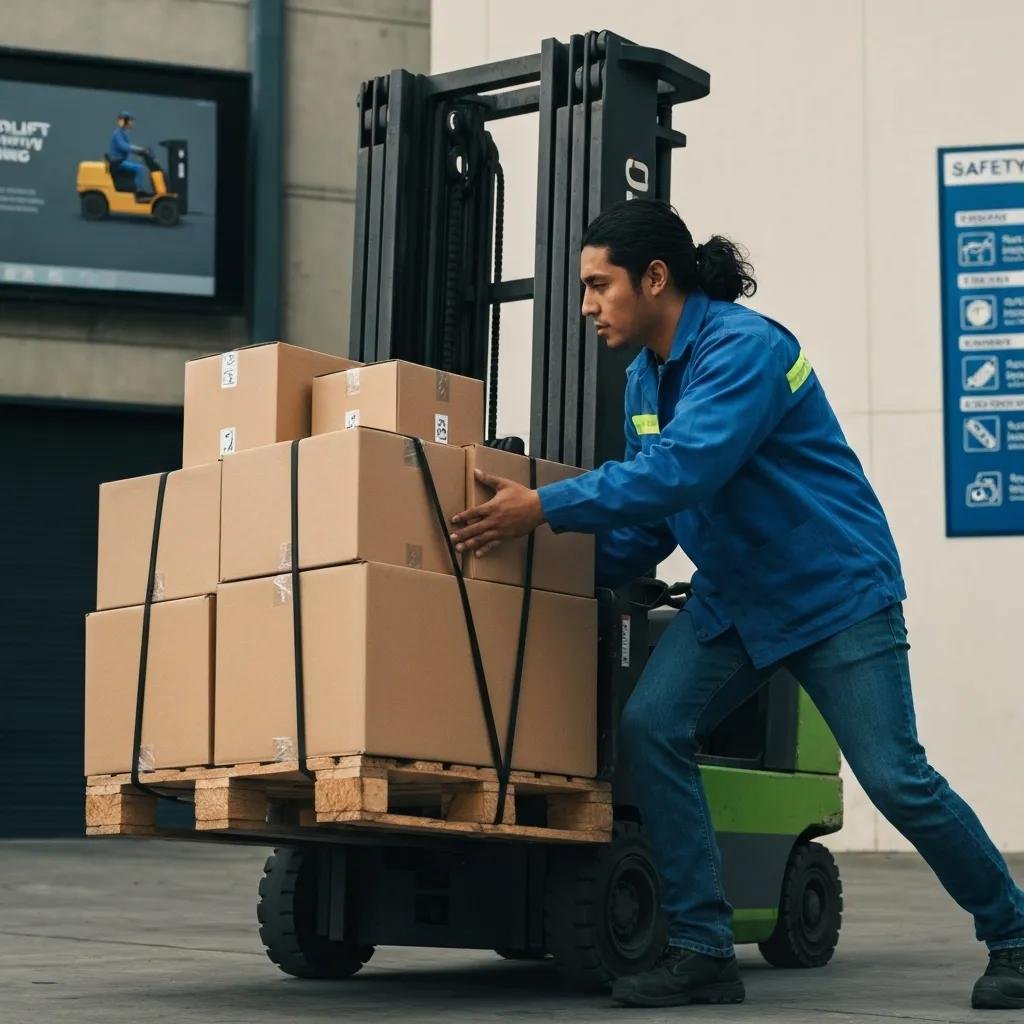
Load handling and stability determine how a forklift responds to turns, gradients and sudden stops; understanding the stability triangle and centre of gravity is essential to preventing tip-overs. Correct load positioning, using appropriate attachments and respecting rated capacities ensure the centre of gravity stays within the safe stability envelope of the machine. Training that emphasises the stability triangle and practical checks for securement reduces incidents where loads shift or collapse. The next subsections define the stability triangle and offer practical steps operators can use to avoid overloading and secure loads correctly.
What Is the Forklift Stability Triangle and Why Is It Important?
The forklift stability triangle is the triangular area formed between the two front wheel contact points and the pivot point at the rear wheel, and it defines the machine’s static stability. When the combined centre of gravity of the forklift plus load moves outside this triangle, often due to lifting too high, turning sharply or uneven loads, the risk of tipping increases substantially. Operators should visualise how load height and forward reach shift the centre of gravity forward and act to lower loads and reduce lift height during travel. Understanding this triangle informs immediate operational choices that keep the centre of gravity safely contained within the stability zone.
The following table compares common forklift types against load capacity and stability considerations to help choose the right machine for the job.
| Forklift Type | Typical Load Capacity | Stability & Common Risks |
|---|---|---|
| Counterbalance | 1–5 tonnes (varies by model) | Stable for short lifts; risks when overreaching or lifting at high speed |
| Telehandler | 2–10+ tonnes with boom | High reach increases tipping moment; requires outriggers or careful load planning |
| Pallet Truck / Walkie Stacker | 0.5–2 tonnes | Low centre of gravity but limited stability for uneven loads or inclines |
| Electric Warehouse Forklift | 1–3 tonnes (common) | Stable with good weight distribution; battery condition affects traction and handling |
This comparison highlights how matching forklift type to application reduces stability-related accidents and informs procurement decisions for varied warehouse tasks.
How Can Operators Avoid Overloading and Ensure Load Security?
Operators avoid overloading by consulting load plates, using provided manuals and confirming pallet condition before lifting to ensure rated capacities are not exceeded. Securing loads with straps, shrink-wrap or appropriate attachments prevents shifting during transport and reduces the chance of load collapse when turning or encountering bumps. Practical steps include checking load distribution, lowering loads for travel and using attachments designed for odd-shaped cargo. Regularly auditing load handling incidents and retraining on securement techniques reinforces best practice and prevents routine complacency.
With machine stability and load security managed, embedding a robust safety culture ensures these practices persist and improve.
How Can Businesses Foster a Strong Forklift Safety Culture?
A strong safety culture combines leadership commitment, clear policies and ongoing engagement so that forklift safety becomes a shared priority across all levels. Establishing measurable safety objectives, regular toolbox talks and near-miss reporting mechanisms turns reactive responses into proactive prevention. Leadership that visibly supports safety and rewards safe behaviours helps normalise procedures such as pre-shift inspections and adherence to traffic plans. The following subsections describe initiatives that create sustained improvement and ways to measure engagement and outcomes.
What Are Effective Safety Culture Initiatives to Reduce Forklift Hazards?
Effective initiatives include near-miss reporting systems that capture learning opportunities, safety champion programmes that reward compliance and routine refresher training tied to observed behaviours. Implemented thoughtfully, these measures produce clear outcomes: higher rates of hazard reporting, reduced repeat incidents and stronger operator ownership of risk controls. Practical implementation tips include anonymous reporting options, regular review meetings and short, focused training modules that fit into shift schedules. Case examples show that small, consistent initiatives often drive greater improvement than one-off campaigns.
Strategies for Regulating Forklift Safety and Preventing Injuries
Regulating Forklift Safety: Strategies to Prevent Injury and Improve Compliance
Regulating forklift safety: Strategies to prevent injury and improve compliance, 2016
How Does Employee Engagement Improve Forklift Accident Prevention?
Employee engagement increases hazard recognition because engaged workers contribute observations, suggest layout changes and participate in safety committees where practical solutions are developed. Engagement tactics such as short surveys, safety suggestion boxes and participatory audits provide measurable metrics like participation rates and the number of implemented suggestions. Tracking these metrics alongside incident trends reveals the correlation between engagement and improved safety performance. Offering a clear channel for input ensures frontline knowledge shapes practical controls and fosters continuous improvement.
When businesses need external support for training, maintenance or hire solutions, local partners can provide tailored assistance. Wollongong Forklift can act as a local partner for training recommendations, maintenance contracts and flexible hire solutions, offering expertise across petrol, diesel and electric forklifts as well as telehandlers and pallet trucks to help implement site-specific safety plans. Engaging a local dealer-service partner supports coordinated training and maintenance efforts that align with a business’s safety objectives and operational rhythms. After embedding culture and processes, managers must understand the primary causes of incidents to target controls where they will be most effective.
What Are Common Causes of Forklift Accidents and How Can They Be Prevented?
Identifying common causes of forklift accidents enables targeted prevention strategies that address the root issues most often linked to harm. Typical causes include collisions with pedestrians or structures, tip-overs from instability, falls from platforms, load collapse and maintenance failures. Each cause has direct prevention measures, such as segregation, stability management, fall protection, correct load securement and scheduled inspections, that reduce frequency and severity of incidents. The following subsections list the top causes and outline immediate practical steps managers and operators can take.
What Are the Top 5 Causes of Forklift Accidents?
The top five causes of forklift accidents are typically: collisions with pedestrians or other vehicles, tip-overs due to instability, falls from the forks or platform, load collapse from improper securement and mechanical failures from poor maintenance. Each cause links directly to preventable conditions: inadequate segregation or training often precedes collisions, while poor load handling practices precede tip-overs and collapse. Brief prevention measures include creating pedestrian exclusion zones, enforcing seatbelt use, securing loads properly, and maintaining equipment per schedule. Targeting these five areas offers the highest return on safety investment in most warehouses.
Analysis of Preventive Maintenance for Forklift Safety
In the oil and gas sector, the transportation of materials and equipment is frequently undertaken using forklifts. Consequently, a safe and dependable forklift is essential to ensure
Analysis of preventive maintenance on forklifts with the lifting and transporting instruments inspection method, B Baharudin, 2023
What Practical Steps Can Prevent These Common Forklift Hazards?
Practical steps include instituting pedestrian exclusion zones, enforcing mandatory pre-shift inspections, providing certified operator training and scheduling routine professional maintenance. Quick wins are clearly marked walkways, speed control policies and regular toolbox talks focused on observed near-misses; longer-term strategies include investing in appropriate fleet types and implementing data-driven maintenance plans. Employers should prioritise measures by risk exposure and monitor performance through incident and near-miss metrics to refine controls. Combining immediate controls with systemic changes reduces both the likelihood and severity of forklift-related incidents.
To support implementation, the final set of practical checklists summarises daily and scheduled actions.
Daily Checks: Perform pre-shift inspection of brakes, lights, horn, tyres and seatbelt before every shift.
Operator Briefings: Hold short toolbox talks covering hazards observed the previous day and any layout changes.
Immediate Repairs: Remove from service any forklift with safety device failures or structural damage.
Scheduled Servicing: Maintain monthly in-house inspections and annual professional servicing records.
These actions provide a clear, repeatable routine that reduces risk and supports continuous improvement across the operation.