Local Forklift Sales in Wollongong: What to Consider for Service Options and Maintenance
Written By : Darko
Choosing a forklift locally involves more than the initial purchase price; service options and maintenance plans determine uptime, safety and total cost of ownership over the machine’s life. This article explains how service choices, preventative maintenance, emergency repairs, full-service contracts, telematics and parts sourcing, affect productivity for Wollongong and Illawarra businesses, and shows what to check when comparing providers. You will learn which service contract types suit different use cases, the recommended maintenance schedules for electric, diesel and LPG forklifts, and practical daily and periodic inspection items that support compliance with Australian safety expectations. The guide also compares rent versus buy implications where maintenance responsibility and SLA coverage materially change budget predictability. Each H2 section below details actionable criteria, includes comparison tables and checklists, and highlights how local service capabilities and diagnostic tools reduce downtime for material handling equipment.
Why Is Choosing the Right Forklift Service Provider in Wollongong Essential?
Choosing the right local forklift service provider directly impacts machine uptime, workplace safety, regulatory compliance and lifecycle costs. Local providers shorten response times and maintain stock of genuine parts, which reduces repair lead times and helps keep forklifts available for production; this mechanism improves productivity and lowers unplanned repair expenses. Selecting a provider with technician qualifications and telematics diagnostic capability ensures faster fault isolation and better long-term reliability, producing measurable uptime gains. The following list summarises the most important selection factors to prioritise when evaluating suppliers.
Local response time and mobile service capability to reduce downtime.
Access to genuine parts and stockholding to maintain manufacturer specifications.
Technician qualifications, manufacturer authorisations and telematics knowledge.
Clear SLAs, transparent pricing and preventive maintenance scheduling.
These factors together create service resilience for operations, and understanding them leads naturally into which certifications and local expertise to verify when choosing a provider.
What Local Expertise and Certifications Should You Look for in a Forklift Service Provider?
Local expertise and relevant certifications indicate that a provider can safely maintain diverse forklift types and meet manufacturer standards. Look for technicians with formal qualifications in material handling equipment maintenance, factory-authorised training for major brands, and experience across electric, diesel and LPG systems; these qualifications are signals that diagnostic and repair work will meet safety and warranty expectations. Verify experience with telehandler, walkie stacker and pallet truck models where relevant, since hydraulic and electrical systems can differ from counterbalance forklifts. Checking authorisation or training badges and asking about recent field experience provides evidence of competency, and that confidence leads into assessing parts availability and response-time commitments.
How Do Response Times and Genuine Parts Impact Forklift Service Quality?
Faster response times reduce lost production hours and limit secondary damage from continued operation with faults, while genuine parts preserve performance and safety margins over the asset’s life. A typical expectation for local response in the Illawarra is measured in business hours for non-critical work and same-day or next-business-day attendance for urgent breakdowns, with mobile vans able to perform common repairs on-site. Parts quality matters for components like hydraulic seals, electrical modules and battery cells where aftermarket substitutions can shorten intervals between failures and affect warranties. When negotiating SLAs, request clear response-time targets and confirmation that genuine parts will be used, because these commitments materially influence long-term maintenance costs and reliability.
For practical local support, Wollongong Forklift is an independent Australian-owned dealer serving the Illawarra region and offers sales, hire and service across petrol, diesel and electric forklifts as well as telehandlers and pallet trucks. Their integrated offering includes mobile service capability and parts supply that can shorten repair lead times for local businesses. Relying on a provider with local stockholding and mobile technicians supports swift repairs and helps align service plans with operational schedules, which reduces downtime risks for production-critical fleets.
What Types of Forklift Service Options Are Available for Buyers in Wollongong?
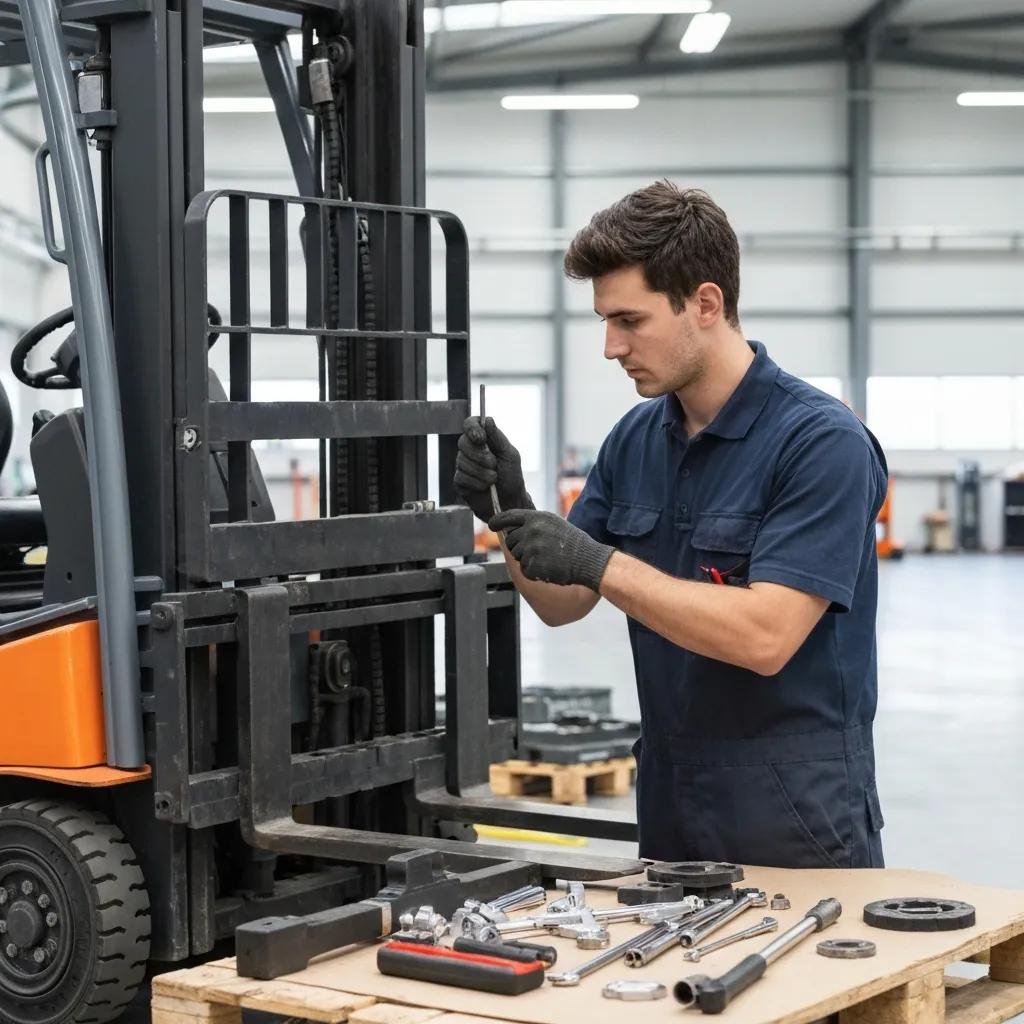
Service options broadly fall into preventative maintenance, emergency (reactive) repairs and full-service or managed contracts, with on-site mobile servicing and workshop repairs as delivery modes. Preventative maintenance focuses on scheduled checks and component replacement to prevent breakdowns, emergency repair service provides rapid response to failures, and full-service contracts bundle routine maintenance, repairs and parts with agreed SLAs for predictable budgeting. On-site mobile service vans reduce transport downtime, while workshop servicing allows deeper diagnostics and heavier repairs; choosing between them depends on fleet size, criticality of uptime and cost preferences. The following EAV table compares these service types to make selection easier.
Service type comparison for Wollongong buyers:
| Service Type | Typical Inclusions | Value for Buyers |
|---|---|---|
| Preventative maintenance | Scheduled inspections, fluids, filters, basic parts | Lowers failure rates and extends asset life |
| Emergency / reactive repairs | On-call fault diagnosis, repairs, parts replacement | Minimises unplanned downtime when faults occur |
| Full-service contracts | Preventative plus repairs, parts, agreed SLAs | Predictable costs and consolidated service responsibility |
This table highlights how different service types trade cost predictability against operational risk, and it leads into how preventative maintenance specifically improves longevity and safety.
How Does Preventative Maintenance Improve Forklift Longevity and Safety?
Preventative maintenance reduces the probability of catastrophic failures by routinely replacing wear items and checking critical systems before faults escalate. Typical tasks include fluid and filter changes, fork inspection, mast lubrication, brake checks, tyre condition assessment and battery health management for electric models, all of which directly reduce failure modes that cause downtime. Regular preventative work also supports operator safety by ensuring controls, lights and safety interlocks operate correctly and that regulatory inspection records are maintained. Implementing a preventive schedule and recording each service event enables trend analysis and targeted interventions, which in turn reduces repair costs over the fleet lifecycle.
Understanding the long-term benefits of proactive maintenance is crucial for optimising a forklift fleet's performance and cost-effectiveness.
Efficient Forklift Utilisation, Cost, and Life Cycle Analysis for Businesses
ABSTRACT: Forklifts are classified as indispensable equipment utilised in manufacturing and warehousing operations. This equipment contributes a significant percentage towards any warehouse and manufacturing operation. Industry surveys confirm that 94% of materials handling businesses do not have an accurate record of their forklift fleet. Inflated costs are usually incurred due to a lack of knowledge or little insight into the true drivers of forklift operating expenses, maintenance, life cycle, and efficient utilisation. A comprehensive study on all the abovementioned aspects affecting forklifts would prove beneficial in the long run for any business that utilises such a fleet. This project will aim at assisting Sasol Dyno Nobel in developing models and providing recommendations for:
• Effective utilisation and operational efficiency of forklifts
• Allocating forklifts to the respective departments within the Sasol Dyno site
• Maintaining and servicing forklifts
• Cost and life cycle
Study on efficient forklift utilisation, cost & life cycle analysis, 2013
When Should You Consider Emergency Repairs or Full-Service Contracts?
Emergency-only arrangements suit small operations with low utilisation or secondary assets where budget constraints prioritise immediate cost savings over uptime. Full-service contracts become cost-effective when forklifts are production-critical, fleet sizes are moderate to large, or when consistent uptime is essential; they trade a higher regular fee for reduced unexpected repair costs and better scheduling. Decision criteria include average use hours per week, tolerance for downtime, in-house maintenance capability and cash-flow preferences. Evaluating these criteria and running a simple TCO comparison between reactive and managed service scenarios clarifies which approach aligns with operational risk appetite.
How Do Forklift Maintenance Schedules Affect Operational Efficiency and Compliance?
Maintenance schedules balance time-based and use-hour triggers to reduce failures while optimising technician time and parts usage. Recommended approaches combine calendar intervals (e.g., six-month reviews) with hour-based triggers (e.g., every 500 operating hours) so that batteries, engines and hydraulic systems receive attention according to wear patterns. Proper scheduling improves planning: planned downtime for checks is less disruptive than emergency repairs, and accurate records support compliance with workplace safety expectations. The table below maps common forklift types to recommended service intervals and primary checks to simplify maintenance planning for Wollongong operations.
| Forklift Type | Recommended Interval | Key Checks |
|---|---|---|
| Electric | Every 500 hours or six months | Battery condition, charger, drive motor, electrical connectors |
| Diesel | Every 500 hours or six months | Engine oil, filters, cooling system, fuel system |
| LPG / Petrol | Every 500 hours or six months | Spark plugs, fuel system, emissions controls, belts |
This mapping helps planners set mixed schedules for multi-fuel fleets, and it transitions into what daily and periodic inspections operators and technicians should perform.
What Are the Recommended Service Intervals for Electric, Diesel, and Petrol Forklifts?
Electric forklifts require focused battery and electrical system checks, including state-of-charge management, terminal cleaning and inverter diagnostics; batteries also need dedicated charging and watering routines where applicable. Diesel and petrol units follow engine maintenance cycles such as oil and filter changes, fuel-filter replacement and cooling-system inspection to avoid engine-related downtime. A practical rule is to use both time and hour metrics, service every six months or after roughly 500 hours of operation, with high-use assets serviced more frequently. Adopting these intervals reduces unplanned failures and supports predictable spare-parts consumption.
What Should Be Included in Daily and Periodic Forklift Inspections?
Daily operator checks catch obvious faults before a shift starts and should be quick, repeatable routines that the operator can complete in minutes. Daily items include visual mast and fork checks, tyre condition, fluid leaks, operation of lights and horn, and basic battery or fuel level checks for electric or fuel-powered units. Periodic technician inspections are deeper and include hydraulic system pressure checks, brake performance testing, engine tune-ups and electrical diagnostics using fault-code readers to identify latent issues. Ensuring inspection results are logged in a standard form supports compliance and creates a traceable maintenance history that auditors and safety officers can review.
Daily operator inspection checklist:
Check forks and mast for deformation or cracks.
Inspect tyres for cuts, excessive wear or low pressure.
Test lights, horn, seatbelt and steering for correct operation.
Regular use of this checklist reduces latent hazards and feeds into scheduled technician maintenance.
What Are the Benefits of Regular Forklift Servicing for Wollongong Businesses?
Regular servicing reduces unplanned downtime, spreads maintenance costs predictably and extends asset life, delivering tangible business advantages. Preventative work finds wear before it causes failure, which reduces parts and labour costs over time and keeps production schedules stable. Servicing also upholds safety standards by ensuring that critical controls and safety devices perform as intended, supporting compliance with workplace safety guidance and simplifying audit readiness. The following list summarises the primary business benefits that flow from disciplined maintenance programs.
Reduced unplanned downtime and higher equipment availability.
Lower lifetime repair costs through early detection of wear.
Improved operator safety and simpler compliance documentation.
Understanding these benefits helps firms prioritise maintenance investment, which leads into how maintenance activity specifically reduces downtime and costs.
How Does Regular Maintenance Reduce Downtime and Repair Costs?
Regular maintenance identifies component degradation early, preventing cascade failures that require expensive repairs or lengthy rebuilds. For example, replacing seals and filters at scheduled intervals avoids hydraulic contamination and protects pumps, which are costly to replace. Scheduled servicing also enables parts to be stocked proactively, so technicians can complete repairs quickly rather than waiting for special-order items. Aggregating minor repairs into planned maintenance visits reduces emergency call-outs and lowers per-incident labour premiums, which together shrink total repair expenditure across the asset lifecycle.
How Does Servicing Ensure Compliance with Australian Safety Regulations?
Consistent servicing and record-keeping create traceable evidence that inspections and repairs have occurred, which aligns with Safe Work Australia guidance and supports SafeWork NSW expectations for plant maintenance. Key activities that support compliance include documented daily checks, scheduled technician reports, and records of parts replacements and testing outcomes. During audits, a clear maintenance log demonstrates due diligence in keeping material handling equipment safe for operators and bystanders. Embedding these practices into fleet management systems strengthens regulatory readiness and reduces the risk of enforcement action or incident-related costs.
How Do Service Options Influence the Rent vs. Buy Decision for Forklifts in Wollongong?
Service arrangements materially change the economics and operational risk of renting versus purchasing forklifts. Rentals often bundle maintenance and emergency response into the hire fee, shifting maintenance responsibility away from the hirer and providing predictable per-period costs. Ownership requires arranging servicing, parts procurement and technician labour directly, which can increase administrative burden and variable costs but offers lower per-hour cost for long-term, high-utilisation use. The following EAV table compares rental and purchase across maintenance responsibility, cost predictability and downtime risk to inform purchasing decisions.
| Ownership Model | Maintenance Responsibility | Cost Predictability |
|---|---|---|
| Rental | Provider typically handles preventative maintenance and repairs | High, as maintenance often included |
| Purchase | Owner arranges servicing and parts | Lower unless a full-service contract is purchased |
| Hybrid (long-term hire) | Varies; negotiated SLAs determine responsibility | Medium, depends on contract terms |
This comparison shows how bundled maintenance in rentals reduces downtime risk for short-term needs, and it leads into the specific responsibilities to check in agreements.
What Are the Maintenance Responsibilities When Renting vs. Buying a Forklift?
Rental agreements commonly include preventative maintenance and emergency repairs as part of the hire, but clients should confirm SLA response times and parts policies in writing. When buying, the owner is typically responsible for arranging scheduled servicing, sourcing genuine parts and contracting technicians or in-house mechanics; this gives more control but also more responsibility. Key contract clauses to request include response-time guarantees, specified use-hour limits, and definitions of wear-and-tear versus damage. Reviewing these responsibilities clarifies operational exposure and bridges into how service contracts affect total cost of ownership.
How Do Service Contracts Affect Total Cost of Ownership?
Service contracts change the TCO profile by converting unpredictable repair spending into scheduled, repeatable costs and by potentially extending useful life through consistent maintenance. Bundled contracts that include parts and labour reduce volatility, while pay-as-you-go models lower recurring fees but increase exposure to large, infrequent costs. Illustrative considerations include comparing annualised maintenance spend under a reactive model versus a full-service plan and modelling downtime cost per hour to determine breakeven. Factoring in these scenarios helps decision-makers choose ownership and service combinations that match utilisation and risk tolerance.
What Should You Know About Forklift Parts and Repair Services in the Illawarra Region?
Sourcing genuine parts and choosing technicians with diagnostic capability are critical to reliable repairs and sustained performance. Genuine parts preserve manufacturer tolerances and often carry warranty support, which reduces repeat failures for critical components like hydraulic seals and electrical control modules. Modern diagnostic tools, telemetry and fault-code readers, speed troubleshooting by revealing fault histories and parameter anomalies, enabling targeted repairs rather than trial-and-error replacement. The following table summarises procurement attributes to evaluate when selecting parts suppliers and repair providers locally.
| Attribute | Why It Matters | Practical Check |
|---|---|---|
| Genuine parts availability | Maintains manufacturer specs and warranties | Ask for part numbers and origin |
| Stockholding | Shorter lead times reduce downtime | Confirm typical delivery times |
| Diagnostic capability | Faster, accurate repairs | Request examples of telematics or fault-code use |
These attributes reduce repair cycle time and costs, and they segue into why genuine parts matter for reliability.
Why Are Genuine Forklift Parts Important for Reliable Repairs?
Genuine parts are designed to match manufacturer tolerances and materials, which preserves safety-critical performance in hydraulic systems, engine components and electrical modules. Using original components reduces the risk of premature wear and ensures replacement items interact correctly with existing assemblies, supporting longevity and predictable maintenance intervals. For items such as hydraulic seals and control electronics, genuine parts substantially lower the chance of recurrent failures, while aftermarket parts may be acceptable for non-critical consumables if cost and traceability are evaluated. Choosing genuine components where safety or performance is at stake is a practical way to protect uptime and asset value.
How Do Diagnostic Tools and Technician Expertise Improve Repair Outcomes?
Telematics and diagnostic tools transform maintenance from reactive to data-driven by surfacing fault codes, usage patterns and battery health trends that point technicians directly to root causes. Skilled technicians who can interpret telemetry and perform targeted tests convert data into efficient repairs, reducing parts replacement and labour hours. Verifying a provider’s diagnostic toolkit and recent case examples of telematics-based repairs confirms their capability to resolve faults quickly. Ensuring technicians combine diagnostic proficiency with practical field experience produces faster mean time to repair and more durable outcomes for forklifts in daily operation.
Daily inspection and record-keeping, combined with technician-led diagnostics and access to genuine parts, create a maintenance ecosystem that reduces downtime and supports compliance across Wollongong operations. For local buyers seeking integrated sales, hire and service solutions, Wollongong Forklift represents a market option that combines local expertise with mobile service and parts supply, which can shorten repair lead times in the Illawarra region. This close alignment between diagnostics, parts availability and local response underpins efficient repair outcomes and better fleet uptime.