Electric vs Petrol Forklift Rental: Which Suits Your Business Best?
Written By : Darko
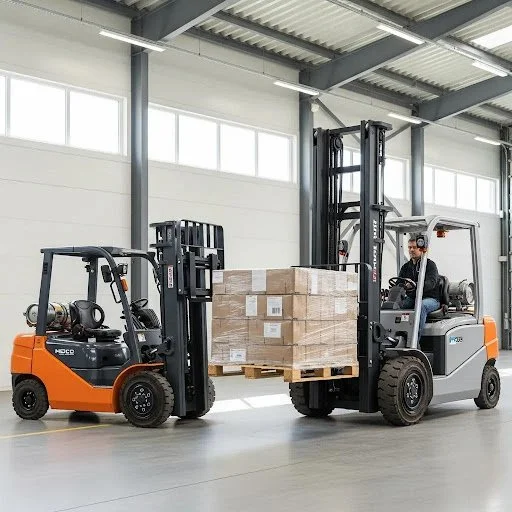
Choosing the right forklift rental option is crucial for businesses looking to optimise their material handling operations. This article delves into the key differences between electric and petrol forklifts, helping you understand which option best suits your business needs. With the growing emphasis on sustainability and efficiency, the choice between electric and petrol forklifts can significantly impact operational costs and environmental footprint. We will explore the operational mechanisms, benefits, and cost comparisons of both types of forklifts, providing a comprehensive guide to inform your decision-making process.
What Are the Key Differences Between Electric and Petrol Forklifts?
Understanding the fundamental differences between electric and petrol forklifts is essential for making an informed rental choice.
Fuel Type and Operation: Electric forklifts operate using rechargeable batteries, while petrol forklifts rely on internal combustion engines fueled by petrol (gasoline) or sometimes LPG (liquefied petroleum gas). This distinction affects their operational environments and efficiency.
Cost Implications: Electric forklifts generally have lower operating costs due to reduced fuel expenses and maintenance needs, whereas petrol forklifts may incur higher fuel and maintenance costs.
Environmental Impact: Electric forklifts produce zero emissions at the point of use, making them suitable for indoor and environmentally conscious operations, while petrol forklifts emit greenhouse gases and are better suited for outdoor applications.
How Do Electric Forklifts Operate and What Are Their Main Features?
Electric forklifts utilise battery power to operate, providing a quiet and efficient solution for material handling.
They are equipped with advanced battery technology that allows for several hours of operational use and varying charging times depending on the battery type and charger. Key features include regenerative braking, which helps extend battery life, and compact designs that enhance manoeuvrability in tight spaces. Their operational efficiency makes them ideal for indoor use, particularly in warehouses and distribution centres.
What Defines Petrol Forklifts and Their Core Characteristics?
Petrol forklifts are characterised by their powerful internal combustion engines, which provide high load capacities and quick refuelling capabilities. They are designed for heavy-duty applications, making them suitable for outdoor environments such as construction sites and large warehouses. Key characteristics include robust performance metrics, fuel efficiency relative to their class, and versatility in various operational conditions. Their ability to operate continuously without the need for recharging makes them a preferred choice for industries requiring constant uptime.
What Are the Benefits of Electric Forklift Rental for Your Business?
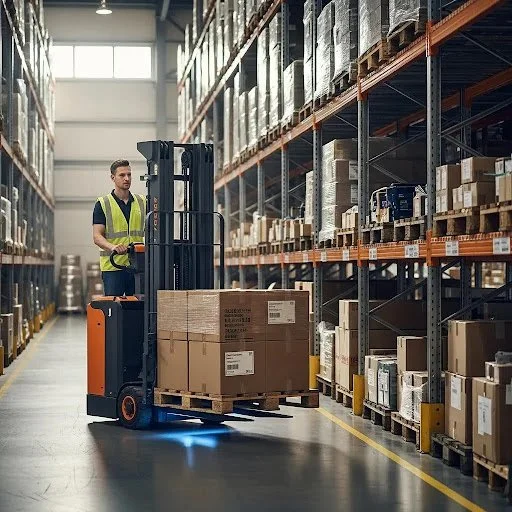
Renting electric forklifts offers several advantages that can enhance your business operations.
Cost Savings: Electric forklifts typically have lower operating costs due to reduced fuel expenses and less frequent maintenance requirements.
Environmental Benefits: With zero emissions at the point of use, electric forklifts contribute to a cleaner working environment and align with sustainability goals.
Operational Flexibility: Their quiet operation allows for use in noise-sensitive areas, making them ideal for indoor applications.
Why Is Electric Forklift Hire Ideal for Indoor and Eco-Friendly Operations?
Electric forklifts are particularly well-suited for indoor operations due to their zero-emission capabilities and reduced noise levels. This makes them an excellent choice for warehouses and retail environments where air quality and noise pollution are concerns. Additionally, their compact design allows for efficient navigation in tight spaces, enhancing productivity in confined areas.
How Do Electric Forklifts Reduce Operating Costs and Maintenance Needs?
Electric forklifts can significantly lower operating costs through their energy efficiency and reduced maintenance needs. With fewer moving parts compared to petrol forklifts, electric models require less frequent servicing, leading to lower maintenance expenses. Furthermore, the cost of electricity is generally lower than petrol prices, contributing to overall savings in operational budgets.
Research highlights how advanced battery technologies, such as hybrid battery-supercapacitor systems, can further enhance the economic benefits and lifespan of electric forklifts.
Electric Forklift Cost Savings: Hybrid Battery Benefits
The effective technical and economical benefits of this EC integration are theoretically and experimentally evaluated, by means of a conventional electric forklift. The performances of the modified electric forklift are simulated with already developed vehicle and components models and validated with experimental data. Simulations and electrical tests confirm the functional relationship, expressed in exponential form, between battery lifetime and peak current and demonstrate the technical and economical potentialities of the use of these hybrid configurations, such as the increased efficiency and the prolonged battery life (more than doubling the life of the battery without EC), due to the reduced battery operating stress, and an economical saving (about 30 %), able to compensate initial extra-costs for vehicle modification and battery replacement.
Hybrid battery-supercapacitor storage for an electric forklift: a life-cycle cost assessment, A Genovese, 2014
What Are the Advantages of Petrol Forklift Rental in Industrial Applications?
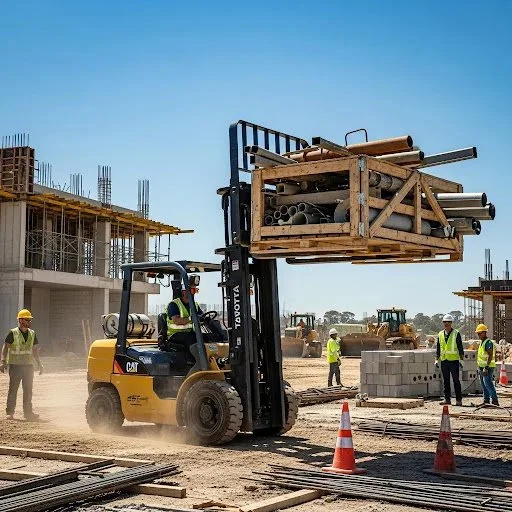
Petrol forklifts offer distinct advantages in industrial settings, particularly where heavy-duty performance is required.
Heavy-Duty Performance: Petrol forklifts are designed to handle substantial loads, making them ideal for demanding industrial applications.
Quick Refuelling: The ability to refuel quickly allows for minimal downtime, ensuring continuous operations in busy environments.
Versatility in Outdoor Conditions: Petrol forklifts excel in outdoor applications, providing the power and flexibility needed for various tasks.
When Should You Choose Petrol Forklifts for Heavy-Duty and Outdoor Use?
Petrol forklifts are the preferred choice for heavy-duty tasks, particularly in construction and logistics operations. Their robust engines provide the necessary power to lift and transport heavy materials efficiently. Additionally, they are well-suited for outdoor environments where terrain and weather conditions may pose challenges for electric models.
How Do Petrol Forklifts Offer Power and Flexibility for Continuous Operations?
The power of petrol forklifts allows them to operate continuously without the need for recharging, making them ideal for environments that require constant material handling. Their high load capacity and adaptability to various tasks ensure that they can meet the demands of busy industrial operations, providing the flexibility needed to handle diverse workloads.
How Do Electric and Petrol Forklift Rental Costs Compare in Australia?
When considering forklift rental options, understanding the cost implications of electric versus petrol forklifts is crucial for budgeting.
| Forklift Type | Upfront Costs | Running Costs | Maintenance Costs |
|---|---|---|---|
| Electric | Moderate to High | Low | Low |
| Petrol | Lower | Higher | Moderate to High |
What Are the Upfront and Running Costs of Electric Forklift Hire?
Electric forklift rentals typically involve moderate to high upfront costs due to the advanced technology and battery systems. However, the running costs are significantly lower compared to petrol forklifts, as electricity is generally cheaper than petrol. Additionally, electric forklifts require less frequent maintenance, further reducing overall expenses.
How Do Petrol Forklift Rental Costs and Fuel Expenses Affect Your Budget?
Petrol forklift rentals may have lower initial costs, but the ongoing fuel expenses can quickly add up, impacting your budget. Fluctuating fuel prices can lead to unpredictable operational costs, making it essential to consider these factors when planning your rental strategy. Moreover, maintenance costs for petrol forklifts can be higher due to the complexity of their engines and the need for regular servicing.
Which Forklift Rental Option Best Fits Your Wollongong or Illawarra Business Needs?
Choosing the right forklift rental option for your business in Wollongong or the Illawarra region involves assessing various factors.
Assessing Business Needs: Consider the specific requirements of your operations, including load capacities and operational environments.
Local Market Considerations: Evaluate the availability of electric and petrol forklift rentals in your area and their suitability for your business.
Rental Flexibility: Look for rental options that offer flexibility in terms of duration and terms to accommodate your changing needs.
What Factors Should Wollongong Businesses Consider When Choosing a Forklift?
Wollongong businesses should consider several key factors when selecting a forklift rental, including:
Load Capacity Requirements: Determine the maximum weight you need to lift and transport.
Operational Environment: Assess whether your operations are primarily indoor or outdoor.
Cost Considerations: Evaluate your budget for both upfront and ongoing rental costs.
How Does Wollongong Forklift Support Your Rental Choice with Flexible Options?
Wollongong Forklift offers tailored rental solutions to meet the diverse needs of local businesses. With a range of electric and petrol forklifts available, they provide competitive pricing and flexible financing options. Their comprehensive customer support ensures that you receive the assistance needed to make the best choice for your operations.
What Are Common Questions About Electric vs Petrol Forklift Rental?
Addressing common questions can help clarify the differences between electric and petrol forklifts.
What Are the Environmental Impacts of Electric and Petrol Forklifts? Electric forklifts produce zero emissions at the point of use, while petrol forklifts contribute to greenhouse gas emissions, making electric options more environmentally friendly.
How Does Maintenance Differ Between Electric and Petrol Forklifts? Electric forklifts generally require less maintenance due to fewer moving parts, while petrol forklifts need regular servicing to maintain engine performance.
What Are the Environmental Impacts of Electric and Petrol Forklifts?
Electric forklifts are environmentally friendly, producing no emissions during operation. This makes them suitable for indoor use and aligns with sustainability goals. In contrast, petrol forklifts emit greenhouse gases, contributing to air pollution and climate change. Businesses aiming to reduce their carbon footprint should consider electric options as a viable solution.
A study further emphasises the significant environmental advantages of electric forklifts over their combustion counterparts.
Electric vs. Combustion Forklift Environmental Impact
The study showed that using an electric forklift to transport 1 t of payload over a distance of 1 km has a significantly smaller environmental impact than using one of the selected forklifts powered by an internal combustion engine. Using forklifts powered by liquefied petroleum gas (LPG) engines leads to a significantly higher environmental impact whilst the use of vehicles with diesel engines has an impact at a level several times lower. In a case of drives without load, where a functional unit was defined as covering 1-km distance with no vehicle load, a lower impact for the electric vehicles was also obtained. The analysis includes the influences of the upstream processes of fuel and electrical energy production.
An environmental life cycle assessment of forklift operation: a well-to-wheel analysis, P Fuc, 2016
How Does Maintenance Differ Between Electric and Petrol Forklifts?
Maintenance requirements differ significantly between electric and petrol forklifts. Electric models typically have lower maintenance needs due to their simpler design and fewer moving parts. In contrast, petrol forklifts require regular engine servicing, oil changes, and fuel system maintenance, leading to higher overall maintenance costs. Understanding these differences can help businesses plan their operational budgets more effectively.